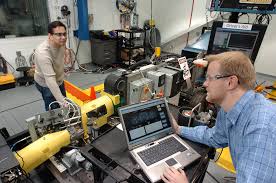
Explore the latest in automotive technology, from electric vehicles to smart safety systems, and see how innovation is transforming the future of transportation.
The automotive sector has shaped us for more than a hundred years, with it being at the forefront of innovation and technology. The industry has led a lot from helping people travel from one urban center to another through the use of cars to the ever-advancing autonomous vehicles.
They have also changed the very lifestyle of people. At the moment, the industry is undergoing even more transformational changes.
| Aspect | Key Statistics | Source/Year |
|---|---|---|
| Electric Vehicles (EVs) | EV sales grew by 43% globally, reaching over 10 million units. | International Energy Agency, 2023 |
| Autonomous Vehicles | 58% of new vehicles in development include some form of autonomous driving system. | McKinsey, 2023 |
| Connected Cars | 77 million vehicles worldwide are connected to the internet. | Statista, 2022 |
| Smartphone Integration | 85% of new vehicles sold include support for Apple CarPlay and Android Auto. | J.D. Power, 2023 |
| Fuel Efficiency | The average fuel efficiency improved by 18% in the last decade. | U.S. Department of Energy, 2022 |
| Hybrid Vehicles | Hybrid vehicles account for 27% of all new car registrations in Europe. | European Automobile Manufacturers, 2023 |
| Charging Infrastructure | Over 2.7 million public EV charging stations are operational worldwide. | BloombergNEF, 2023 |
| Emission Reduction | Automotive technologies reduced CO2 emissions per mile by 22% since 2010. | Environmental Protection Agency, 2023 |
| Market Value | The global automotive technology market is projected to reach $500 billion by 2030. | Automotive technologies have reduced CO2 emissions per mile by 22% since 2010. |
They are now changing towards more electric automation. As a result, there come three additional factors of growth: Sustainability of the vehicles, Automation, and the growing need for CO2 reductions. This is further leading to connected vehicles, which will allow control of a car from remote locations over the internet. We will talk about these breakthroughs and changes in the automotive industry in greater detail below.
Electrification: Advancement of Electric Vehicles (EVs)
Ionization changes the very fuel type used in the car, making it more environmentally friendly. The use of Electric Cars (EVs) is expected to completely change the automotive landscape for the better. Additionally, it would enable 0 greenhouse gas emissions (GHG) along with cost-lowering features. Most companies are ready for the EV transition, including newcomers like Tesla and Rivian. Industry leaders like GM and Ford are also focused on EVs.
Lithium-ion batteries, electric motors, and regenerative braking systems are the key components of EV technology. Solid-state batteries and enhanced energy densities are new advancements with the potential to shorten charging times and extend driving ranges. Moreover, tax rebates, subsidies, and charging station infrastructure are some of the policies stimulating EV adoption globally.
Self-Driving Cars: The New Era of Autonomous Driving
Autonomous vehicles (AVs) mark yet another significant development in the automotive industry. Producers of self-driving technologies such as Waymo, Cruise, and Tesla focus on developing AVs, which are fully capable of autonomous navigation. As outlined by the Society of Automotive Engineers (SAE), automation is divided into six defined levels: Level 0 with no automation, and Level 5 with full automation.
AVs are made possible through the following key technologies:
👉Lidar and Radar Systems: These sensors assist the vehicles with surrounding environment detection as well as mapping.
👉Artificial Intelligence (AI): Real-time driving decisions during a journey based on sensor data are made by machine learning algorithms.
👉High-Definition Maps: These are detailed contextual digital maps that aid in navigation.
The implementation of autonomous vehicles has the potential to transform transportation by enhancing safety, alleviating traffic congestion, and improving accessibility for individuals unable to drive. Despite these benefits, issues such as regulations, public acceptance, trust, and ethical implications are still critical obstacles to broader adoption.
Connectivity: The Internet of Vehicles
The integration of connectivity into automotive technology has led to the emergence of the “Internet of Vehicles”. Connected cars utilize sophisticated telematics and communication systems to facilitate real-time data exchange between vehicles, infrastructures, and third parties. In-car Wi-Fi, V2X communication, and over-the-air software updates are becoming standard features.
The Internet of Vehicles creates value in many dimensions, including:
👉Improved Safety: With V2X communication, vehicles are capable of cautioning one another about potential dangers.
👉Improved Navigation: Drivers can receive and respond to real-time traffic updates, enabling better navigation.
👉Remote Diagnostics: Vehicle performance can be monitored by automobile manufacturers, enabling preemptive resolution to issues.
Connected systems enable Mobility as a Service (MaaS), which consolidates multiple transportation methods into a single, easy-to-access service. This transition reflects a movement toward a shared mobility framework, further supporting sustainability in densely populated areas.
Sustainability Initiatives in the Automotive Sector: A Focus on Green Innovations
The environmental challenges associated with sustainability have been of particular importance for the automotive industry. Alongside strides being made towards vehicle electrification, there are more innovations occurring focused on the manufacturing processes, materials used, and the management of the vehicle after its useful life.
Key initiatives include:
👉Lightweight Materials: The adoption of carbon fiber, aluminum and high-strength steel offer better fuel economy due to the reduction in weight of the vehicle.
👉Recycling and Reuse: Renew strategies are being developed for the recycling of batteries and other components of the vehicle.
👉Renewable Energy Integration: The integration of solar panels onto EVs, as well as manufacturing plants powered by renewable energy, leads to carbon neutrality.
Moreover, the circular economy concept is gaining attention with its focus on improving overall resource efficiency and waste across the lifecycle of a product.
Human-Machine Interaction: Improving the Driving Experience
Focus on interactivity and enhancing user experience is making it easier for drivers to interact with vehicles through advanced human-machine interfaces (HMIs). These interfaces simplify interactions through voice recognition, touchscreens, augmented reality, and gesture controls, providing a seamless interface for the driver and the vehicle.
Key developments include:
👉Augmented Reality (AR) Displays: Critical information like navigation and speed can be displayed through AR heads-up displays on the windshield.
👉Voice-Controlled Functions: NLP systems enable drivers to perform several functions by voicing commands, making vehicle operation simpler.
👉Tailoring: AI systems learn preferences for drivers to tailor their seat settings and climate controls.
These features improve not only the safety of drivers but also reduce distractions while driving.
Challenges and Opportunities
Automotive technology advances enhance the functionality of the automobile, but at the same time, there are many other factors that need to be considered. Research and development, infrastructure, cybersecurity concerns, and the threat of cyberattacks are some of the most prominent issues. In addition, automakers still have the challenge of balancing affordability with innovation.
On the other hand, all of these problems can be helped with automation and innovation. Collaboration between technology companies, automobile manufacturers, and the government can greatly enhance progress. In addition, breakthroughs in quantum computing and nanotechnology can greatly resolve current limitations.
The Road Ahead
The automobile industry holds a great deal of promise and uncertainty in equal measure for its future. Emerging trends such as flying cars, hydrogen fuel cells, and advanced biofuels hint at even more transformative possibilities. Moreover, the convergence of technologies like 5G, blockchain, and edge computing could redefine mobility as we know it.
Success in the automotive industry will increasingly depend on how well it meets climate-related issues, urban development, and social accessibility. If the automotive sector embraces innovation, collaboration, and sustainability, it will be able to propel forward into a future that is not only technologically advanced but also socially equitable and environmentally responsible.